Author: landonshelpman

  • RFK Jr. Confirmed as HHS Secretary—Senator Rick Scott Pushes Vote Over the Edge

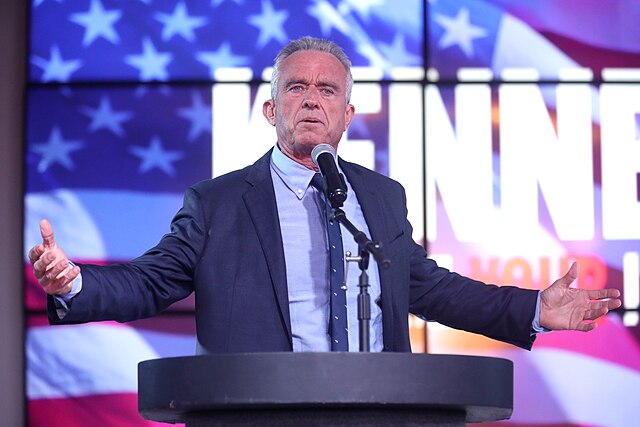
    Robert F. Kennedy, Jr. speaking with supporters at a campaign rally at Legends Event Center in Phoenix, Arizona. / Gage Skidmore

    In a decisive moment for the Biden administration, Robert F. Kennedy Jr. has officially been confirmed as Secretary of Health and Human Services (HHS). While his nomination faced strong opposition—including a “no” vote from Senate Minority Leader Mitch McConnell—the final tally was pushed over the majority threshold thanks to Senator Rick Scott of Florida, who provided the key vote to secure Kennedy’s confirmation.


    A Controversial Path to Confirmation

    RFK Jr.’s nomination was one of the most debated in recent memory. His past skepticism of vaccines and criticism of government health agencies made him a polarizing figure. However, during confirmation hearings, Kennedy walked back many of his previous statements, pledging to support evidence-based health policies and work closely with Congress to reform federal healthcare programs.

    McConnell, a longtime advocate for vaccines and public health funding, firmly opposed Kennedy’s nomination. His “no” vote was widely expected, as he has previously broken with his party on key issues related to health policy.

    Despite this, Senator Rick Scott’s support proved to be the deciding factor. With a razor-thin margin, his vote tipped the scales, ensuring Kennedy’s confirmation and sending a strong message about shifting dynamics within the GOP.


    Scott’s Vote: A Political Calculation?

    Rick Scott’s decision to break with party leadership raises several questions. Was this a calculated political move aimed at appealing to certain voter demographics, or does Scott genuinely believe that Kennedy will bring meaningful reforms to HHS?

    Some speculate that Scott, who has long advocated for healthcare system overhauls, saw Kennedy as an outsider willing to challenge entrenched bureaucratic policies. Others believe Scott’s vote could be a strategic play to distance himself from McConnell’s leadership, positioning himself as a more independent force in the Senate.

    Whatever the motivation, Scott’s vote will undoubtedly have political repercussions, both within the Republican Party and in future Senate negotiations.


    What’s Next for RFK Jr. at HHS?

    Now that Kennedy is officially confirmed, he faces a daunting challenge ahead. As Secretary of HHS, he will oversee critical issues such as:

    • Healthcare policy and access reforms
    • Vaccine distribution and public health funding
    • Medicare and Medicaid oversight
    • Pandemic preparedness and response

    His tenure will be closely watched, especially by both Democrats wary of his past rhetoric and Republicans divided on his appointment. The big question now is whether Kennedy will govern as a centrist reformer or remain a controversial disruptor in federal health policy.


    Final Thoughts: A Party Divided

    McConnell’s opposition, Scott’s decisive vote, and the broader split within the GOP highlight growing divisions over health policy, party loyalty, and leadership direction. While RFK Jr.’s confirmation is now official, the political implications of this vote will continue to play out in the months ahead.

    With McConnell breaking ranks and Scott stepping into the spotlight, one thing is clear—the battle for influence within the Republican Party is far from over.


    What do you think?

    Was Scott’s vote a smart political move, or will it come back to haunt him? And how will RFK Jr. handle his new role as HHS Secretary? Let’s discuss.

  • McConnell Breaks Party Lines Again: What His ‘No’ Vote on RFK Jr. Means for the GOP

    Senate Minority Leader Mitch McConnell has once again broken ranks with his party, voting against the confirmation of Robert F. Kennedy Jr. as Secretary of Health and Human Services (HHS). While Kennedy had enough votes to secure the position, McConnell’s opposition signals continued divisions within the Republican Party—and potentially sets the stage for another round of criticism from Donald Trump.


    McConnell’s Vote: A Stand on Public Health?

    McConnell’s decision to oppose Kennedy likely stems from his longstanding support for vaccines and public health policies—a stark contrast to Kennedy’s history of vaccine skepticism and criticism of government health agencies. As a polio survivor, McConnell has been one of the few Republican leaders who has remained vocal about the importance of vaccines, even when his party has shifted toward a more “medical freedom” stance.

    This isn’t the first time McConnell has broken from the party line on a key nomination. Just last week, he also voted against the confirmation of Tulsi Gabbard as Director of National Intelligence, citing concerns over her foreign policy approach.


    Trump’s Reaction? More GOP Infighting on the Horizon

    McConnell’s move is sure to draw attention from Donald Trump, who has frequently criticized the Senate leader for failing to fully support his administration. Trump has already made it clear that he wants loyalty from Republican lawmakers, and McConnell’s continued independence could make him a target for more public attacks from the former president.

    The ongoing McConnell-Trump feud has shaped much of the GOP’s internal power struggles in recent years. With Trump as the dominant figure in the party and McConnell representing the old-guard establishment, moments like this highlight the fractures within the Republican leadership—especially as the party prepares for the 2026 midterms.


    What’s Next for the GOP?

    While McConnell’s vote wasn’t enough to block Kennedy’s confirmation, it raises questions about the future direction of the Republican Party. Will more Republicans start openly defying Trump and his influence, or will McConnell’s approach remain an outlier?

    For now, McConnell seems determined to prioritize policy over party loyalty, even if it means facing backlash from Trump and his base. Whether this strategy strengthens or weakens his influence within the GOP remains to be seen.

    One thing is clear: the Republican divide is far from over—and McConnell just added more fuel to the fire.


    What do you think? Is McConnell taking a principled stand, or is he out of step with today’s GOP? Let’s discuss.

  • Senate Recap: Key Highlights from February 12, 2025

    The U.S. Senate had a packed legislative session on February 12, 2025, with key nominations, bill introductions, and committee hearings shaping the day. The most notable event was the confirmation of Tulsi Gabbard as the new Director of National Intelligence and continued debate on the nomination of Robert F. Kennedy, Jr. for Secretary of Health and Human Services. Here’s a breakdown of the day’s most important developments.


    1. Major Senate Confirmations and Nominations

    Tulsi Gabbard Confirmed as Director of National Intelligence

    In a 52-48 vote, the Senate confirmed Tulsi Gabbard to lead the nation’s intelligence community. Gabbard, a former Congresswoman from Hawaii, will now oversee intelligence operations and security matters for the U.S. This confirmation was one of the most closely watched decisions of the day, signaling potential shifts in intelligence policy under her leadership.

    Debate on Robert F. Kennedy, Jr. as Secretary of Health and Human Services

    The Senate continued debating the nomination of Robert F. Kennedy, Jr. for Secretary of Health and Human Services (HHS). In a 53-47 vote, the Senate agreed to limit further debate, setting up a final confirmation vote on February 13, 2025, at 10:30 AM. The nomination has sparked significant discussion due to Kennedy’s controversial positions on health policy and regulatory oversight.

    Upcoming Votes on Key Nominees

    After the Kennedy vote, the Senate will proceed with confirmation votes for:

    • Brooke Rollins (Secretary of Agriculture)
    • Howard Lutnick (Secretary of Commerce)
    • Kelly Loeffler (Administrator of the Small Business Administration)

    These votes are scheduled to conclude no earlier than Tuesday, February 18, 2025.


    2. New Legislation and Measures Passed

    Local Access to Courts Act Passes

    The Senate unanimously passed the Local Access to Courts Act (S. 32), which clarifies where federal courts may hold hearings in Texas and California. This measure aims to improve access to federal courts in large districts where travel distances can be significant.

    26 New Bills and 2 Resolutions Introduced

    The Senate saw 26 new bills and 2 resolutions introduced. One of the key resolutions, S. Res. 76, authorizes expenditures for the Committee on Health, Education, Labor, and Pensions, ensuring funding for legislative oversight and policy initiatives.


    3. Senate Committee Hearings and Reports

    Budget Committee Advances FY2025 Budget Plan

    The Senate Budget Committee approved a concurrent resolution setting the budget framework for fiscal years 2025-2034. This is an essential step in determining government spending levels and economic priorities for the next decade.

    Arctic and Greenland’s Strategic Importance

    The Commerce, Science, and Transportation Committee held a hearing on the geostrategic importance of the Arctic and Greenland. Experts emphasized national security, climate research, and resource development, highlighting Greenland’s role in future U.S. military and economic policies.

    Advancing Carbon Capture Technology

    The Environment and Public Works Committee discussed advancements in carbon capture, utilization, and sequestration (CCUS). Scientists and industry leaders provided updates on new technologies aimed at reducing carbon emissions and ensuring effective implementation of the USE IT Act.

    Native Communities’ Priorities

    The Indian Affairs Committee held an oversight hearing on the priorities of Native American and Native Hawaiian communities. Tribal leaders testified about healthcare, education, and economic development challenges that need urgent attention in the 119th Congress.


    4. Looking Ahead: What’s Next in the Senate?

    • Final Vote on RFK Jr. as HHS Secretary – February 13, 2025, at 10:30 AM
    • Vote on Brooke Rollins (Secretary of Agriculture) – February 13, 2025
    • Commerce and Small Business Nominee Votes – February 18, 2025

    With major confirmations, key budget discussions, and legislative action underway, the Senate is setting the stage for an impactful year ahead. Stay tuned as we track the next steps in these significant policy decisions.

  • A Day in the House: Key Takeaways from February 12, 2025

    On February 12, 2025, the U.S. House of Representatives had a full legislative day, engaging in debates, votes, and procedural actions. The most notable development was the passage of H.R. 77, a bill designed to change how Congress reviews last-minute regulations issued by outgoing presidential administrations. Here’s a breakdown of the day’s key moments:

    Morning Session: Setting the Tone

    The House convened at 10:00 AM, with Rep. Mariannette Miller-Meeks presiding as Speaker pro tempore. After the Pledge of Allegiance, a morning-hour debate allowed members to make speeches on various issues before the main legislative business began.

    At 12:05 PM, the House Chaplain, Margaret Grun Kibben, delivered the daily prayer, and the House formally approved its journal. The session then moved into one-minute speeches, where representatives took turns delivering brief remarks on issues of importance to them and their constituents.

    The Main Legislative Event: H.R. 77

    The centerpiece of the day’s proceedings was H.R. 77, a bill aimed at changing how Congress handles “midnight rules.” Midnight rules refer to regulations that a presidential administration rushes through in its final months in office, often without full scrutiny.

    Currently, Congress can overturn these rules one at a time, which can be a slow and inefficient process. H.R. 77 proposes a change: instead of reviewing midnight rules individually, lawmakers would be able to reject multiple regulations all at once (en bloc). This is intended to make it easier for a new administration and Congress to undo last-minute policy changes made by a departing administration.

    The bill was hotly debated, with supporters arguing that it ensures accountability and prevents last-minute policy shifts from taking effect without proper oversight. Opponents, however, raised concerns that bundling multiple regulations together could make it harder to evaluate them fairly.

    After an hour of debate, the bill passed narrowly by a vote of 212-208, with a motion to reconsider being laid on the table. A prior attempt to send the bill back to committee (a motion to recommit) had failed by a vote of 205-213.

    Evening Session: Wrapping Up the Day

    Following the legislative business, the House moved into special order speeches, where members had additional time to speak on issues of their choosing. These speeches continued for about an hour before Rep. Glenn Grothman moved to adjourn.

    At 6:39 PM, the House officially adjourned, setting its next meeting for 9:00 AM on February 13, 2025.

    What’s Next?

    Now that H.R. 77 has passed the House, it will move to the Senate, where it will face further debate and a potential vote. If approved by the Senate, it will then head to the President’s desk for signature or veto.

    This legislation, if enacted, could have a significant impact on how regulatory changes are handled during presidential transitions. It reflects an ongoing effort by Congress to assert more control over executive actions, particularly those made in the final stretch of an administration.

    Stay tuned for further developments as the debate over midnight rules continues.

  • Rep. DeSaulnier Condemns Presidential Pardons for January 6 Insurrectionists

    February 12, 2025 – Washington, D.C.

    During today’s House session, Rep. Mark DeSaulnier (D-CA) delivered a forceful condemnation of President Donald Trump’s decision to grant sweeping pardons and commutations to over 1,500 individuals convicted for their roles in the January 6, 2021, attack on the U.S. Capitol.

    DeSaulnier called the move an “affront to democracy”, expressing outrage that individuals who violently attacked law enforcement officers and attempted to disrupt the peaceful transfer of power have now been released.


    Key Points from DeSaulnier’s Remarks

    1. The Impact of the January 6 Attack

    Rep. DeSaulnier highlighted the immense toll of the insurrection, reminding Congress of the violence inflicted on law enforcement:

    • At least 174 police officers were injured while defending the Capitol from the mob.
    • Five officers who responded later died, some due to injuries sustained during the attack and others by suicide in the aftermath.
    • Insurrectionists carried weapons, bear spray, and homemade explosives, with some directly attacking officers in an attempt to breach the building.

    “I have vivid memories of the Capitol Police officers, battered and exhausted, but still defending us.”

    DeSaulnier called on Americans to remember the sacrifices of these officers, warning that pardoning their attackers sends a dangerous message about the rule of law.


    2. Dangerous Individuals Have Been Released

    DeSaulnier detailed the disturbing criminal records of some of those pardoned, including:

    • A rioter who shot a gun directly into the neck of an officer, causing a heart attack and traumatic brain injury.
    • An individual who attacked officers with bear spray, who is now at-large for allegedly soliciting a minor in 2016.

    The congressman slammed the administration for releasing violent offenders, saying that these individuals not only betrayed the country but now pose an active danger to the public.

    “The decision to grant clemency to many violent and dangerous individuals is an affront to our democracy, our justice system, and the brave police officers who defended us that day and every day.”


    3. A Call for Reflection and Accountability

    DeSaulnier urged his colleagues and the American people to reflect on the consequences of these pardons, warning that this decision undermines law enforcement, weakens democracy, and emboldens future extremists.

    “I ask members and Americans to reflect on this decision.”

    He emphasized that the country must not forget the gravity of January 6 and called for continued vigilance in defending democratic institutions.


    What’s Next?

    • Will there be congressional pushback against the pardons, including possible legislative efforts to limit future presidential clemency powers?
    • How will law enforcement agencies react to the decision, given the significant injuries sustained by officers during the attack?
    • Will Trump face further scrutiny for his role in both the insurrection and his decision to pardon those involved?

    The debate over the January 6 attack and its aftermath remains one of the most contentious issues in American politics, and Rep. DeSaulnier’s remarks signal continued Democratic resistance to efforts to whitewash or excuse the events of that day.


    What Do You Think?

    Should the individuals convicted for their role in January 6 have been pardoned, or does this undermine justice and law enforcement? Share your thoughts in the comments!

  • Rep. Thompson Celebrates Release of American Teacher Mark Fogel from Russian Custody

    February 12, 2025 – Washington, D.C.

    During today’s House session, Rep. Glenn Thompson (R-PA) celebrated the successful release of Pennsylvania school teacher Mark Fogel from Russian custody, praising President Donald Trump’s administration for securing his freedom in just 22 days after years of stalled efforts under the previous administration.


    Mark Fogel’s Unjust Detention

    Mark Fogel, a dedicated educator and U.S. citizen, was unjustly detained in a Russian penal colony for more than 3 ½ years.

    • Originally sentenced to 14 years of hard labor, his punishment was widely considered excessive and politically motivated.
    • Despite bipartisan appeals for his release during the Biden administration, no progress was made in designating him as wrongfully detained or securing a diplomatic resolution.

    “For more than 3 ½ years, Mark, a dedicated teacher, loving husband, and American citizen, was unjustly detained in a Russian penal colony.”


    Trump Administration’s Swift Action

    Rep. Thompson credited President Donald Trump, Secretary of State Marco Rubio, and Special Envoy Steve Hitcoff for successfully negotiating Fogel’s release in just 22 days.

    • Thompson highlighted this as an example of Trump’s commitment to keeping his promises, contrasting it with years of inaction under Biden.
    • The quick resolution demonstrated a renewed focus on securing the release of Americans wrongfully detained abroad.

    “Enter Donald J. Trump. In just 22 days, President Trump, Secretary Rubio, Special Envoy Steve Hitcoff, and a team of advisors successfully negotiated Mark’s release.”


    Fogel is Back on American Soil

    Fogel’s return marks a significant diplomatic victory, reinforcing the administration’s commitment to protecting American citizens abroad.

    • He has reunited with his family, bringing relief to his loved ones after years of uncertainty.
    • Thompson emphasized the administration’s swift diplomatic efforts, closing his remarks with:

    “Mark Fogel is now back on American soil and reunited with his family. Promises made, promises kept.”


    What’s Next?

    Fogel’s release raises questions about the fate of other Americans still detained overseas, including journalists and former military personnel held in Russia, China, and Iran.

    • Will the Trump administration use similar tactics to secure more prisoner releases?
    • How will this impact U.S.-Russia relations moving forward?

    As diplomatic efforts continue, the successful negotiation for Fogel’s release may serve as a model for future hostage recovery operations.


    What Do You Think?

    Was Trump’s approach to securing Fogel’s release the right move, and should it be applied to other detained Americans? Share your thoughts in the comments!

  • Rep. Lee Condemns Efforts to Dismantle CFPB, Calls on GOP to Defend Working Families

    February 12, 2025 – Washington, D.C.

    During today’s House session, Rep. Susie Lee (D-NV) delivered a strong defense of the Consumer Financial Protection Bureau (CFPB) and denounced efforts by the Trump administration, Elon Musk, and the Department of Government Efficiency (DOGE) to dismantle it. She warned that eliminating the CFPB would benefit billionaires and corporations at the expense of working-class Americans, particularly those struggling with rising costs and financial exploitation.


    Lee’s Key Arguments: CFPB Protects Working Families

    1. The CFPB Has Saved Americans Over $20 Billion

    Rep. Lee outlined the critical consumer protections the CFPB has provided since its creation, including:

    • Capping overdraft fees and credit card late fees, preventing banks from exploiting working families.
    • Suing big banks that engaged in fraudulent and predatory practices, forcing them to compensate affected consumers.
    • Recovering over $20 billion from abusive corporations, ensuring that money is returned to Americans instead of lining the pockets of Wall Street executives.

    “The CFPB has protected working families for years. It has saved Americans over $20 billion from abusive corporations.”

    She argued that eliminating the CFPB would strip these protections away, making it easier for banks and predatory lenders to take advantage of consumers.


    2. Elon Musk and DOGE Are Attacking Consumer Protections

    Rep. Lee blasted Musk and the Department of Government Efficiency (DOGE) for their role in dismantling the CFPB, calling it an attack on working families in favor of billionaires and big corporations.

    “Now Elon Musk and DOGE want to kill it because it’s better for billionaires and big corporations, and not for you.”

    She emphasized that removing consumer financial protections does not help ordinary Americans, instead making it easier for financial institutions to impose hidden fees, hike interest rates, and target vulnerable consumers.


    3. The Trump Administration’s Policies Are Hurting Working Americans

    Lee also criticized the broader economic policies of the Trump administration, arguing that none of its actions so far have actually lowered costs for working families.

    • Inflation and high costs continue to burden Nevadans.
    • Financial institutions are poised to exploit consumers if CFPB oversight is removed.
    • The administration’s priorities favor corporate profits over affordability for working families.

    “None of what the Trump administration has done so far is making life more affordable for working Nevadans.”


    4. A Call to Action: Republicans Must Decide

    Lee concluded her speech by urging Americans to demand accountability from Republican lawmakers, warning that they hold the power to stop the CFPB’s dismantling but have so far refused to act.

    “If you are concerned about these attacks on working families and attacks on our Constitution itself, I implore you to call your nearest Republican.”

    She challenged GOP members of Congress to stand up against the push to eliminate the CFPB and to follow through on their promises to make life more affordable for working Americans.

    “Let’s face it, they control Congress, and it’s up to them to stand up and help us stop this unconstitutional power grab.”


    What’s Next?

    With House and Senate budget negotiations ongoing, expect continued battles over consumer financial protections, banking regulations, and corporate accountability.

    • Will Congress move forward with dismantling the CFPB, or will bipartisan pressure force Republicans to protect it?
    • How will Americans react to the removal of consumer protections that have saved them billions?
    • Will GOP lawmakers publicly vote on the CFPB’s fate, as Democrats have demanded?

    As the fight over consumer protections escalates, Rep. Lee’s speech signals that Democrats will continue pushing back against efforts to weaken financial oversight.


    What Do You Think?

    Should the Consumer Financial Protection Bureau be dismantled, or is it a necessary watchdog for working Americans? Share your thoughts in the comments!

  • February 12, 2025 – Washington, D.C.

    During today’s House floor session, Rep. Joe Wilson (R-SC) delivered a speech condemning the expansion of federal agency power during the Biden administration and urging support for the Midnight Rule Relief Act—a bill that would make it easier for Congress to strike down last-minute executive branch regulations.


    Wilson’s Key Points: Fighting Bureaucratic Overreach

    1. The Midnight Rule Relief Act

    Wilson praised the legislation introduced by Rep. Andy Biggs (R-AZ), arguing that it would restore congressional authority over federal regulations.

    • The bill would allow Congress to disapprove multiple regulations at once—instead of requiring separate votes for each policy—when those regulations were issued in the last year of a president’s term.
    • Wilson argued that the current process for overturning agency rules is too slow, allowing harmful regulations to linger and disrupt economic growth.
    • He blamed the Biden administration for expanding executive power at the expense of Congress and the American people.

    “Federal agencies were allowed to drastically expand power, undermining the legislative authority of Congress.”

    If passed, the Midnight Rule Relief Act would provide Congress with new tools to block regulations that Wilson and other House Republicans argue kill jobs and stifle economic growth.


    2. Job-Killing Regulations and Economic Concerns

    Wilson linked government regulations to job losses, arguing that Biden-era policies have hampered economic progress.

    • He criticized environmental, labor, and financial regulations, claiming they create red tape that destroys American jobs.
    • He called for a return to Trump-era deregulation, saying that the former president’s approach created a stronger economy and more opportunities for American workers.

    “This bill will provide Congress with the necessary tools to reject regulations, protecting democracy and creating jobs.”


    3. National Security and Immigration

    Wilson also pivoted to national security concerns, tying border security to the risk of terrorism.

    • He warned that open borders could allow terrorists to enter the country, citing an FBI warning that the U.S. remains vulnerable to another 9/11-style attack.
    • He praised Trump’s national security approach, saying that if re-elected, Trump would reinstate laws to strengthen border protections.

    “Open borders for dictators put all Americans at risk of more 9/11 attacks as warned by the FBI.”

    Wilson concluded his remarks with his signature “God bless our troops” statement, reinforcing his support for strong national defense policies.


    What’s Next?

    The House is expected to vote on the Midnight Rule Relief Act this week.

    • If passed, it could significantly alter how Congress overturns executive regulations, giving lawmakers greater power to quickly roll back last-minute Biden administration rules.
    • However, Senate Democrats are likely to oppose the measure, setting up a partisan battle over executive authority and regulatory oversight.

    Expect fierce debate between Republicans and Democrats over whether the bill is a needed check on executive overreach or a reckless rollback of important federal protections.

  • Rep. Kaptur Calls for Action on Ukraine, Economic Pressures, and Rising Costs

    February 12, 2025 – Washington, D.C.

    During this morning’s House floor session, Rep. Marcy Kaptur (D-OH) delivered a powerful speech addressing two critical issues: the war in Ukraine and the ongoing economic struggles facing American families. She urged Congress and the administration to take decisive action to support Ukraine against Russia while also tackling rising inflation, unaffordable housing, and the skyrocketing costs of basic necessities.


    Defending Ukraine: “The Scrimmage Line for Liberty”

    Kaptur reaffirmed her unwavering support for Ukraine, calling it “the scrimmage line for liberty on the continent of Europe”. She condemned Russia’s 11-year war of aggression, emphasizing that Ukraine has been fighting for its survival since 2014 following Putin’s illegal invasion of Crimea.

    • She noted that hundreds of thousands of innocent people have died in the conflict.
    • The U.S. must continue working with NATO and allied nations to push Russia back within its borders.
    • Kaptur welcomed today’s international meeting, where U.S. Secretary of Defense Pete Hegseth and U.S. allies discussed a potential path to ending the war.

    “The international community must safeguard Ukraine’s borders, and those negotiations are yet to come.”

    She expressed hope that a negotiated peace deal could be reached, but made clear that the U.S. must stand firm in supporting Ukraine’s sovereignty.


    The Economic Reality: Rising Costs Are Squeezing Working Americans

    Kaptur then shifted her focus to the economic challenges facing her constituents in Ohio and across the country, highlighting the financial hardships that have made everyday life increasingly unaffordable.

    1. Inflation and Rising Costs

    • The Consumer Price Index (CPI) increased unexpectedly by 3% last month, worsening the financial pressure on American families.
    • Grocery prices continue to surge, with eggs in Ohio now costing between $6.66 and $8 per dozen.
    • Gas prices have surpassed $3 per gallon, straining household budgets.
    • Property taxes are skyrocketing, making homeownership more difficult for middle-class families and seniors.

    “People aren’t just feeling economic pressure, they’re being crushed by it.”

    2. Healthcare and Pharmacy Closures

    • While some prescription drug prices were lowered under previous Democratic legislation, millions still struggle to afford essential medications.
    • Major pharmacy chains are shutting down, leaving entire communities without access to life-saving prescriptions.
    • Kaptur criticized Congress for failing to hold hearings on this crisis, demanding action to ensure people can fill their prescriptions without traveling miles away.

    “Where are people supposed to go to fill their prescriptions? Why are there no hearings on that here in Congress?”

    3. Housing Costs and Financial Struggles

    • Rents keep rising, forcing families and seniors to downsize or leave communities they’ve lived in for decades.
    • Consumer fraud, credit card scams, and financial exploitation are on the rise, targeting Americans who are already struggling.
    • More people are resorting to gambling, taking financial risks they can’t afford just to try and get ahead.

    “My district is no stranger to lottery tickets, scratch-offs, casinos. The wheels just turn faster. People taking chances. And in the last election, that’s exactly what they did.”

    4. Higher Education Costs Are Driving Young Americans Away

    • College tuition is becoming unaffordable for most American families, limiting opportunities for the next generation.
    • Kaptur warned that if young people cannot afford to learn, the country’s economic future is in jeopardy.

    “If our young people can’t afford to go to school and learn, what does that imply for the future of this country?”


    A Call for Congressional Action

    Rep. Kaptur urged Congress and the new administration to prioritize relief for working Americans, not just corporate interests. She called on lawmakers to:

    Continue supporting Ukraine’s fight for sovereignty
    Address inflation and the rising cost of basic goods
    Investigate pharmacy closures and ensure access to prescription drugs
    Reduce housing and property tax burdens for families and seniors
    Expand access to affordable higher education

    “Too many families are overwhelmed with the cost of living. Congress needs to wake up and start fighting for them.”


    What’s Next?

    As budget negotiations continue in Congress, expect increased debate over economic policies that could help—or further burden—working Americans.

    • Will Congress act to address inflation and the housing crisis?
    • How will lawmakers respond to Ukraine’s calls for continued U.S. support?
    • Will there be bipartisan efforts to tackle pharmacy closures and prescription drug costs?

    Kaptur’s remarks underscore the urgency of these challenges and set the stage for further policy debates in the weeks ahead.

  • Rep. Auchincloss Slams NIH Funding Cuts, Calls on GOP to Protect U.S. Research

    February 12, 2025 – Washington, D.C.

    During this morning’s House floor speeches, Rep. Jake Auchincloss (D-MA) delivered a forceful denunciation of the National Institutes of Health’s (NIH) decision to cap indirect cost recapture rates at 15%, arguing that the move threatens America’s biomedical research infrastructure and hands a victory to China. He called on Republicans to oppose the Trump administration’s policy and warned of severe economic and scientific consequences if the change is implemented.


    Key Concerns Raised by Auchincloss

    1. NIH Policy Change is “Illegal” and Breaks Bipartisan Commitments

    Auchincloss blasted the administration’s move, saying it violates longstanding agreements on research funding.

    • In 2017, the Trump administration attempted to lower NIH indirect cost rates to 10%, but a bipartisan congressional vote blocked the effort.
    • Since then, the Appropriations Committee has reauthorized the existing rate structure every year, ensuring research institutions could recoup necessary infrastructure costs.
    • Auchincloss challenged Republicans, stating:“You voted for this. They are breaking that law you voted for. What are you going to do about it?”

    He accused the administration of ignoring legal precedents and acting without congressional approval, setting a dangerous precedent for long-term scientific funding.


    2. The Cuts Will Cripple Research Institutions

    Auchincloss explained how the NIH’s new policy will devastate research institutions, particularly universities and hospitals that rely on indirect cost recovery to fund critical operations.

    • Indirect costs cover essential research infrastructure, including:
      • Lab space, equipment, and energy costs
      • Support personnel and data management systems
      • Technology needed for genetic engineering, drug development, and clinical trials
    • He warned that without adequate funding, research institutions will refuse NIH grants because they cannot afford to take on projects without sufficient operational support.

    “We are not in an era of beakers in backyards. We are in an era of cutting-edge genetic engineering, and the equipment costs money.”

    If institutions decline NIH grants, the pipeline of new medical discoveries and biotechnology advancements will slow dramatically.


    3. Impact on Massachusetts and National Innovation

    Auchincloss highlighted the direct economic and medical consequences for Massachusetts, a global leader in biomedical research, stating that the policy amounts to a $2 billion attack on the state’s research infrastructure.

    • Massachusetts’ “Meds & Eds” sector drives billions in economic activity and supports hundreds of thousands of high-paying jobs.
    • He underscored breakthroughs that have resulted from NIH-funded research, including:
      • Advances in Alzheimer’s treatment
      • Gestational diabetes therapies
      • A new non-opioid painkiller developed in Massachusetts, offering an alternative to highly addictive substances fueling the opioid crisis.

    “The work we do in Massachusetts changes lives.”

    However, Auchincloss warned Republicans that these cuts won’t just hurt blue states—they will impact hospitals, universities, and biotech hubs across the country.

    “Go back to your districts. Talk to your universities, your hospitals. They don’t want to see this policy go into effect.”

    He challenged Republican lawmakers to explain to their own constituents why they are supporting a policy that will undercut research and economic growth in their home states.


    4. China is the Big Winner if the U.S. Cuts Research Funding

    Auchincloss issued a stark warning that America’s biotechnology leadership is at risk, citing China’s aggressive investment in biomedical research.

    • At the recent JPMorgan Healthcare Conference, two key themes dominated:
      1. Artificial intelligence in biotech, which requires cutting-edge research investment.
      2. China’s rapid rise as a biotech superpower, with tens of billions being poured into life sciences.

    Auchincloss warned that China’s biotech sector is celebrating the U.S.’s self-imposed research cuts, saying:

    “They cannot believe their luck. We are cutting our own research infrastructure at a time when they are investing tens of billions of dollars.”

    This move, he argued, would allow China to outpace the U.S. in medical innovation, leading to lost economic opportunities, weakened global competitiveness, and fewer medical breakthroughs for Americans.


    Auchincloss to GOP: “Wake Up and Stand Up for Science”

    Auchincloss urged Republicans to take action, calling on them to push back against the Trump administration’s decision and support basic science funding.

    “Republicans, wake up. Stand up. Support basic science.”

    He warned that the NIH’s decision won’t just hurt blue states like Massachusetts—it will damage the entire country’s ability to lead in biomedical research, harming both the economy and public health.


    What’s Next?

    With House and Senate budget negotiations ongoing, the fate of NIH research funding will be a critical point of debate.

    • Will Republicans push back against the administration’s NIH policy, or will they allow the funding cuts to stand?
    • Will bipartisan support for biomedical research remain intact, or will political divisions threaten America’s leadership in science and technology?

    As the fight over science funding and global competitiveness intensifies, expect more pushback from researchers, universities, and biotech leaders who argue that NIH investment is critical for U.S. innovation and economic strength.